With customer acquisition costs only rising, website personalization is top of mind on the list of to-dos for many eCommerce retailers.
With small budgets, many online retailers often turn to advertising as a means of increasing their average order value or revenue on their website. However, instead of spending all of your marketing budget on marketing campaigns, it can often be just as important to focus on the customers who are already visiting your site, and leverage a personalized user experience to help drive sales and average order value.
Highly utilized and recognized by eCommerce giants and professionals, sites like Amazon truly showcase the importance of product recommendations in eCommerce. According to a MyBuys study of more than 100 top Internet retailers, recommending products based on a user’s purchasing or browsing behavior resulted in a 915% increase in conversion rates.
When retailers recommend a product on a site, it's not pure coincidence – these recommendations come from data. Much can be made about what we learn about consumers' shopping habits online, and retailers capture this data to better serve customers and meet their needs. Personalized product recommendations are based on user behavior. In displaying complimentary products that have been frequently viewed, considered or purchased with the one the customer is currently viewing, makes it easy to cross-sell or up-sell to your consumers.
Dynamically generated on an eCommerce site based on purchase habits, retailers can use product recommendations to both cross-sell and up-sell to their customers, by providing potentially higher margin products related to a shopper's original search.
An example of cross-selling involves showing accessories for a given product or presenting information based on customer buying behavior such as “People Who Bought This Also Bought.”
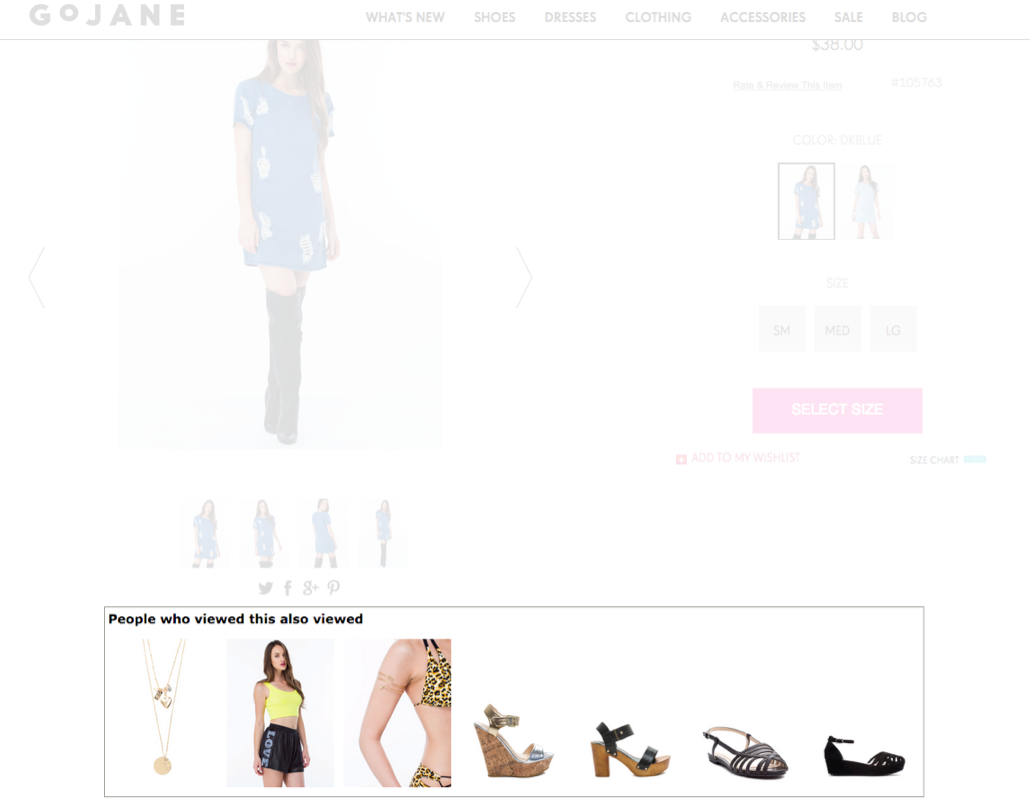 Keep in mind, context is key with product recommendations – do not recommend products that a customer is not yet looking for. It is important to view product recommendations as a conversion funnel. When customers perform their initial search, product recommendations should be directly related and similar to the initial search or product visited. As customers move further along the purchase channel (after viewing different items and putting some in their virtual cart) it is then strategic to offer complimentary products. At this point in the conversion channel, do not overwhelm your customer by offering dozens of different product recommendations on your website, but offer them a reason to pair items together. Strategic product recommendations present the right products at the right price point, in a personalized manner and in the right context.
Keep in mind, context is key with product recommendations – do not recommend products that a customer is not yet looking for. It is important to view product recommendations as a conversion funnel. When customers perform their initial search, product recommendations should be directly related and similar to the initial search or product visited. As customers move further along the purchase channel (after viewing different items and putting some in their virtual cart) it is then strategic to offer complimentary products. At this point in the conversion channel, do not overwhelm your customer by offering dozens of different product recommendations on your website, but offer them a reason to pair items together. Strategic product recommendations present the right products at the right price point, in a personalized manner and in the right context.